Femme in Focus 2026: Jèryh Luz on roots, freedom and her own sound
Lees het interview met Jèryh Luz in het Nederlands
With Femme in Focus, North Sea Round Town invests in space, visibility, and artistic leadership for female makers. In a sector where these are still too often lacking, the programme offers time, resources, and trust to develop new work and define one’s own direction. In 2026, Jèryh Luz takes center stage. From a residency at Boerderij Driebergen, she develops new repertoire that moves between jazz, neo-soul, and fusion, and comes to life across the city during the festival, from intimate settings to larger stages.
In this interview, Jèryh speaks about her musical roots, the need to stay true to her own sound, and what it means to take a position as a maker. About Rotterdam as her home base, about depth and emotion in her work, and about the moment when everything comes together on stage.
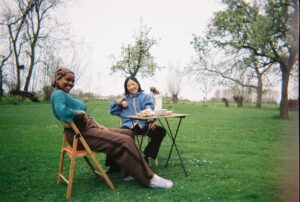
photo series by the artists — Femme in Focus Lab, Boerderij Driebergen
Who are you as a maker, beyond the standard bio?
How did you get here in terms of your musical roots, scenes, and influences, and when did you first feel: this is my voice, this is my lane?
Music has always been present in my life. I come from a musical family, so my path in music was always supported by my parents. From a young age I was taking violin lessons, piano lessons, (jazz) ballet, tap dance, hip hop, musical theatre classes, and I sang in a Cape Verdean children’s choir. All at the same time. After school and on weekends, I was never bored. Even in primary school, I knew I wanted to go to a conservatory, but I was still deciding between violin, musical theatre, or singing. That changed when I was 16 and discovered artists like Erykah Badu, Robert Glasper, and D’Angelo. Through them I found a mix of jazz, soul, and hip hop — also known as neo-soul. I was so impressed that I became obsessed with that scene and started analyzing it. To this day, it still strongly influences my musical style. At the same time, my musical upbringing at home was much broader, ranging from West African and Latin music to classical and rock.</4>
What drives you to make what you make, and what frustrates you in that process?
What’s underneath it for you — a drive, a necessity, a story — and where does it rub against the scene, the industry, or representation? When does it feel like the system isn’t built for you?
I love music with substance, both lyrically and harmonically. It can be challenging and doesn’t have to follow the “rules.” In the current scene, I notice that many artists eventually choose the commercial and safe route instead of staying true to themselves. That frustrates me the most. I’ve always promised myself to create what I feel, and not to focus on how my work is received by the mainstream industry. That freedom comes first.
What does ‘femme’ mean to you within Femme in Focus?
When do you feel seen, and when not? And what does it mean to carry this role now?
This concept, where the female artist takes center stage, really speaks to me. I still notice that women are often seen as “the singer,” someone who just stands at the mic and sings. But we are so much more. We write, compose, produce, lead the band, and are ultimately responsible for shaping the performance. I still get surprised reactions when I say I compose my own music. Women in the music industry deserve much more recognition, and projects like this help support that. I feel honored to be leading Femme in Focus this year.
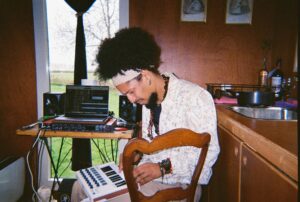
What are you building this spring and summer toward your premiere and the shows in Rotterdam?
Can you highlight a few moments you’re most looking forward to? What happens there, who are you working with, and what makes it different from a ‘regular’ performance?
Femme in Focus has given me the extra motivation to restart my own music. In 2023, I released my debut EP, and after that I mainly worked on musical projects for other artists, putting my own creations on the back burner. Being able to make this new start with the musicians I’ve been working with for a long time, who feel like family by now, makes it extra special. This project forces me to let go of my perfectionism to a large extent. Normally, I might spend at least a year on a song, but now I have two months to create and showcase an entirely new repertoire. It’s very challenging, but also incredibly educational.
What does it do to your work that this project moves through the city instead of staying in one place?
How does the energy change between a club, an outdoor space, or a public setting, and when does it become exciting or unpredictable?
Besides performing at different locations, I’m also playing in different setups, and I think that’s what I find most exciting, what it does to the music. The energy in a duo setting is completely different from being on a big stage with a six-piece band. How the audience and different groups respond is very unpredictable. I just let it happen. Once I’m on stage, I let go of all thoughts and simply stay in the moment.
What is the common thread in what you do as an artist?
Which themes, sounds, or stories keep returning, regardless of the setting?
I hardly ever write love songs, unconsciously. The themes I write about tend to be social or personal. About self-reflection and topics that others can relate to. I find it meaningful to pass something on, or to make someone think. Music has both a conscious and an unconscious therapeutic effect.
Why does this project work particularly well in Rotterdam for you?
What do you feel in the city, what makes it different from other places you perform, and which scenes or people inspire you here?
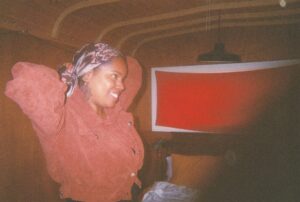
Rotterdam is my number one city. I was born and raised here. My friends and family are all here. It truly is my home, and it feels that way. I’ve performed in many places across the Netherlands, but Rotterdam always feels different. I can always count on running into at least five people I know, so that support is always there. Everywhere you look, there’s art, even in the people themselves. In Rotterdam, everyone is themselves. You encounter every culture, every style, and you’re allowed to be who you are. Nobody is too much.
What should someone feel when they walk into your show for the first time?
When is it successful for you, and what do you hope people take with them when they leave?
Layering, depth, and emotion. For me, a show is successful when I’ve been able to inspire someone and when I feel that everyone becomes one in that moment. Nothing else matters. I’ve experienced that a few times, but I can’t really explain what it is or how it happens. If you know, you just know.
If you hadn’t become a musician, what would you have been?
And do you see traces of that in how you work now?
I’ve thought about this a lot, but I can’t imagine anything else. Music is truly my life. I can’t go a day without harmony. Maybe a dancer? That’s where it all started for me. I can’t stand still when I hear music.
If you look back on Femme in Focus a year from now, when has it really succeeded for you?
Not just in terms of success, but in terms of impact. What needs to have changed for you or around you?
It’s my dream to break through musically with my own work. If I can travel the world with my art, surrounded by the right people, then it will feel complete. Femme in Focus gives me the opportunity to be seen, and that will definitely open new doors. As I said before, I hope female (independent) artists get the recognition they deserve and are taken seriously. We rock!!
The premiere of Femme in Focus 2026 takes place on Saturday 27 June at Boerderij Driebergen, with early bird tickets available until 29 May. During North Sea Round Town (25 June – 12 July 2026), Femme in Focus unfolds across the city. From mid-May, you’ll find all concerts in our agenda.
Interview by Paula Hoorn (Programmer / Curator, City Program NSRT)
photo: credits by the artist